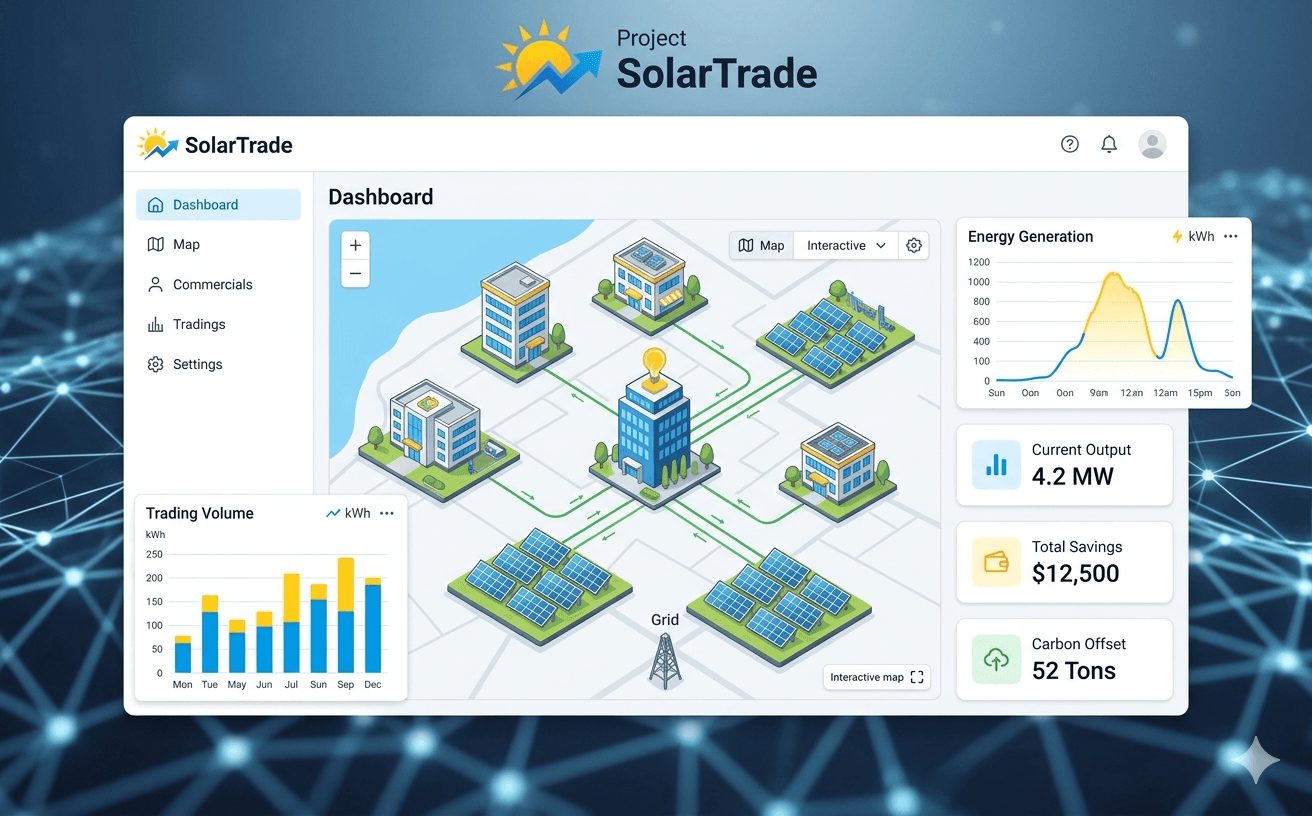
SolarTrade
MVP in 38 daysSolar energy traders in India had surplus power but no digital marketplace to sell it peer-to-peer. The existing process was entirely manual — phone calls, spreadsheets, and bank transfers that took 3–5 days to settle.
The client needed a platform that could integrate with DISCOM smart meters in real-time, process UPI payments instantly, and maintain an immutable record of every transaction on a blockchain — all within a tight 38-day MVP timeline.
We built a multi-tenant P2P solar energy trading platform from the ground up. The architecture separates tenant data completely while sharing infrastructure costs — critical for a marketplace with multiple energy producers and buyers.
The DISCOM smart meter integration was the most complex part. We built a real-time data pipeline that polls meter readings, validates energy output, and triggers automated trades when threshold conditions are met.
- 1
FastAPI backend
Chosen for async performance needed for real-time meter polling.
- 2
PostgreSQL with multi-tenant row-level security
Keeps producer and buyer data isolated without separate databases.
- 3
Hyperledger Fabric
Private blockchain for transaction records — not public chain, because the client needed data privacy.
- 4
n8n automation
Handles settlement workflows and notification triggers without custom code.
- 5
UPI payment integration via Razorpay
Instant settlement vs 3–5 day bank transfers.
Client
Solar energy trading company, India
Industry
Clean Energy / FinTech
Timeline
38 days (MVP)
Team
Parth + specialist engineers
Status
Live — trading across 3 districts
Tech Stack
Key Results
Days to MVP
Districts live at launch
Blockchain-verified transactions
“DISCOM APIs are inconsistent across states — we had to build a normalisation layer that abstracts the differences. This added 4 days to the timeline but saved weeks of debugging post-launch.”
See More of Our Work
Ready to build something like this?
Book a Free Architecture Call