PromptOS
Internal + client useEvery team using AI tools faces the same problem: the quality of output depends entirely on the quality of the prompt. Most people write vague, context-poor prompts and get inconsistent, generic results — then blame the AI.
We were seeing this pattern in our own workflows and in client teams we worked with. The solution was not better AI — it was a system that structured the human input before it reached the AI.
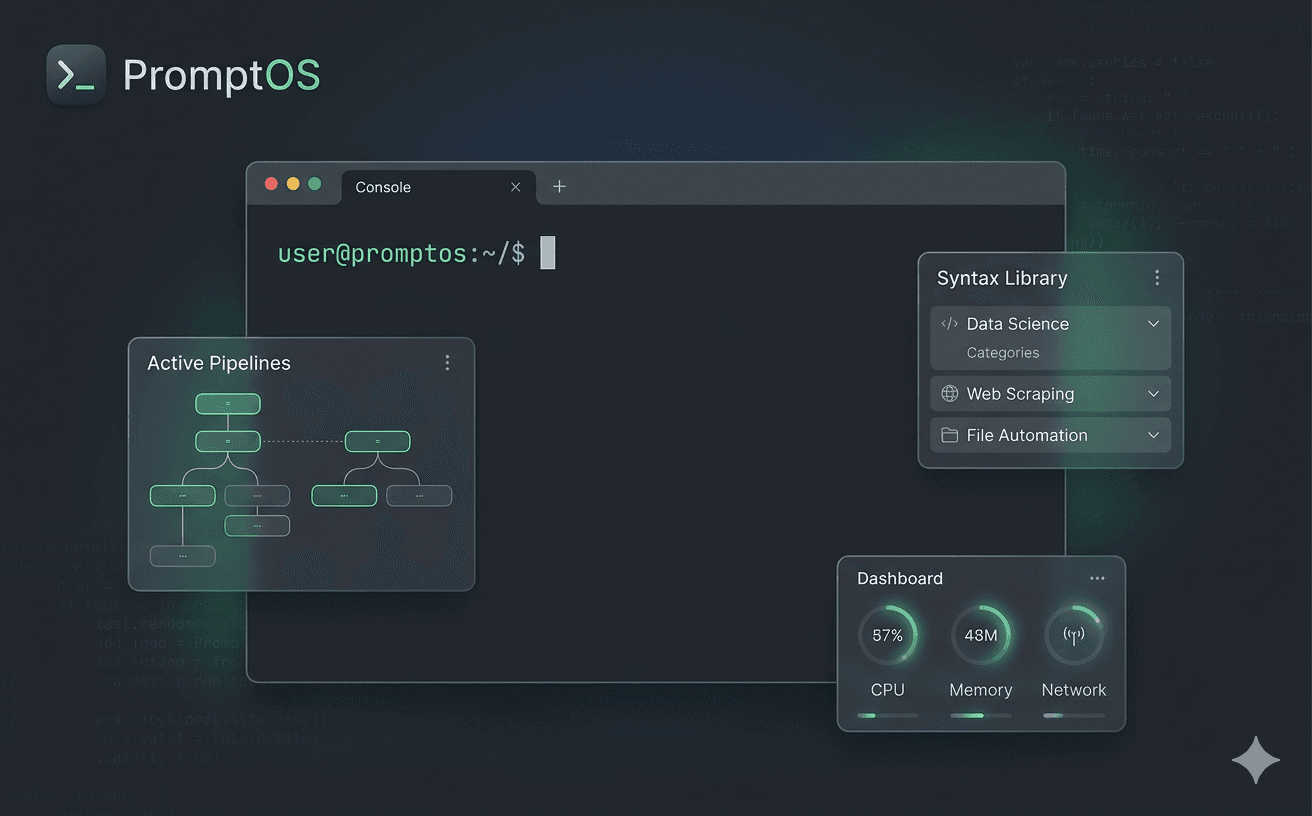
PromptOS is an agent web app that takes rough user input and restructures it into a precise, context-rich prompt before execution. The user describes what they want in plain language — PromptOS asks clarifying questions, adds context, specifies format, and builds a production-ready prompt.
It works with any LLM (Claude, GPT-4, Gemini) via a routing layer. Teams can save their best prompts to a shared library, version them, and share them across the organisation.
- 1
Claude API as the restructuring engine
Chosen for its instruction-following capability for prompt engineering tasks.
- 2
Next.js frontend
Real-time streaming UI that shows the prompt being built token by token.
- 3
n8n integration
Allows PromptOS to trigger downstream workflows once a prompt is executed.
- 4
FastAPI backend
Handles prompt versioning, team libraries, and LLM routing.
- 5
Multi-LLM router
Abstracts provider differences so teams can switch models without changing prompts.
Client
Internal tool — now used by 3 client teams
Industry
AI Tooling / Productivity
Timeline
6 weeks
Team
Parth + specialist engineers
Status
Live — internal and client deployment
Tech Stack
Key Results
Prompt output quality
Client teams using it
LLM providers supported
“The clarifying questions step was the biggest UX challenge — too many questions frustrated users, too few produced vague prompts. We settled on a maximum of 3 targeted questions based on what was missing from the original input.”
See More of Our Work
Ready to build something like this?
Book a Free Architecture Call